
Warehouses often handle multiple operations within one large space. Inventory storage, shipping, receiving, and production activities must coexist without interfering with daily operations.
Warehouse separation walls help businesses create dedicated work zones without permanent construction. These modular systems allow facility managers to organize different departments while maintaining flexibility as operational requirements change.
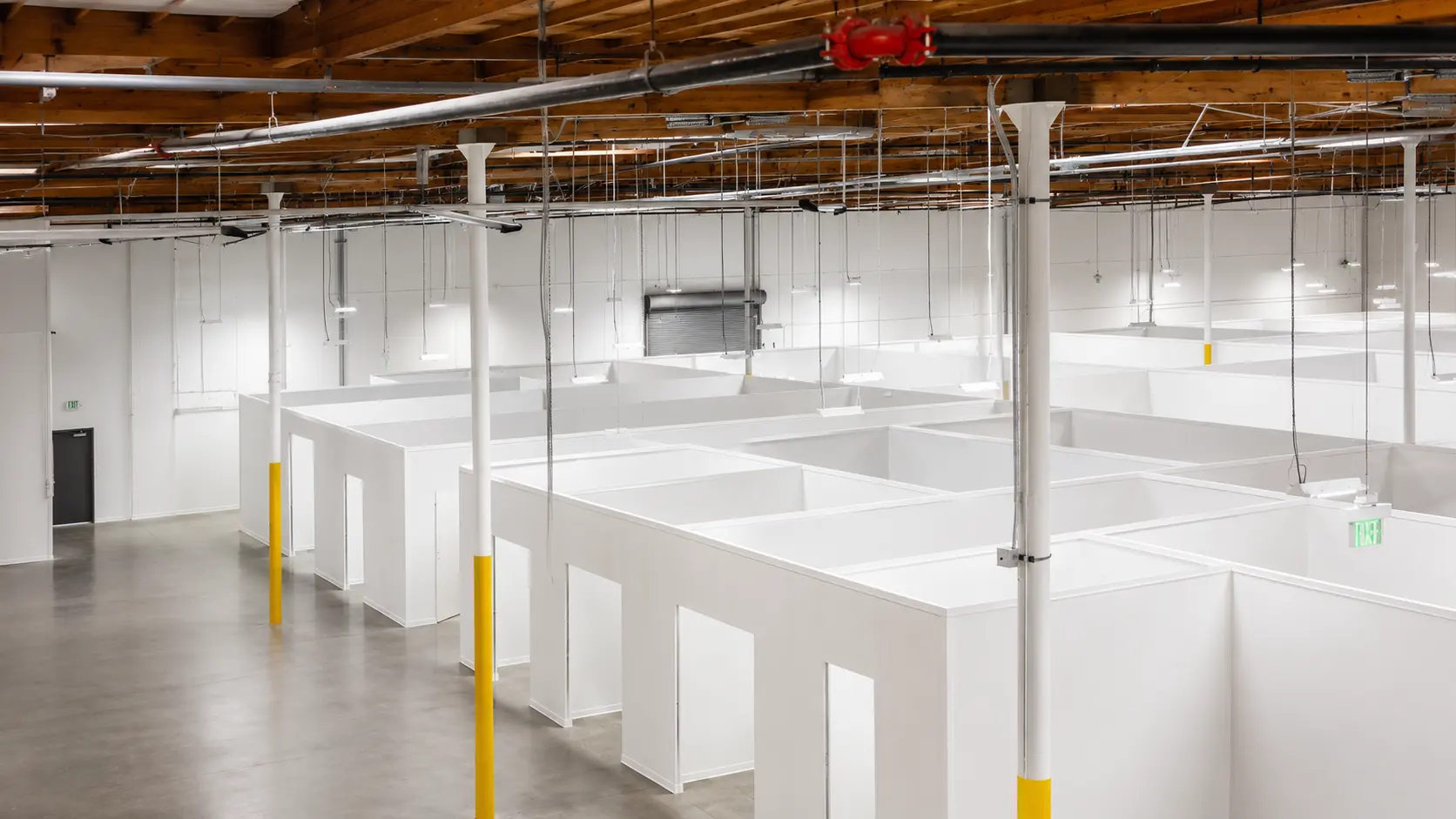
Planning Zones Within Your Warehouse
Storage
Inventory and equipment boundaries
Shipping
Receiving and outbound staging
Production
Assembly and quality control
Why Warehouse Separation Walls Matter
A warehouse layout should support the activities taking place inside the facility. When departments share open space without defined boundaries, it becomes harder to maintain organized work areas.
Warehouse separation walls provide physical divisions that help facilities:
- Establish dedicated storage areas
- Separate incoming and outgoing shipments
- Define production and packaging zones
- Create designated employee workspaces
- Organize inventory processing areas
- Adapt layouts as business requirements change
The key is planning each partition around the facility’s existing operations.
Planning Warehouse Separation Walls for Storage Areas
Storage areas require organized layouts that allow employees to locate and retrieve inventory efficiently.
Warehouse separation walls can establish boundaries between bulk storage, active inventory, and specialized storage areas.
Common applications include:
- Bulk inventory storage
- Product returns and inspection areas
- Equipment and supply storage
- Seasonal inventory sections
- Order fulfillment staging areas
When planning these spaces, facility managers should consider shelving locations, material-handling equipment, and access requirements.
Modular walls can define storage boundaries without requiring major structural changes.
Businesses exploring different configurations can review our guide to the best temporary wall systems for warehouses.
Separating Shipping and Receiving Operations
Shipping and receiving areas frequently operate near loading docks, pallet staging locations, and inventory processing stations.
Creating separate zones helps employees identify where incoming materials should be received and outgoing shipments should be prepared.
Warehouse separation walls can divide:
- Incoming shipment inspection areas
- Outbound order staging zones
- Packaging and labeling stations
- Returns processing sections
Partitions should be positioned to preserve forklift routes, loading dock access, and pedestrian walkways.
For facilities requiring adaptable layouts, partition walls provide a practical way to establish organized operational boundaries.
Creating Dedicated Production Areas
Production activities often require dedicated spaces within larger warehouses.
Manufacturing, assembly, packaging, and quality inspection may operate alongside inventory storage and distribution.
Warehouse separation walls help define these work zones without requiring businesses to construct permanent interior walls.
For example, a facility could establish separate areas for:
- Product assembly
- Packaging operations
- Quality control inspections
- Production equipment
- Finished product staging
These divisions help employees recognize where specific activities take place.
Facility managers should also consider equipment clearances, ventilation, emergency exits, and applicable safety requirements when planning partition placement.
Need to Separate Active Warehouse Areas?
Discuss your storage, shipping, and production layout with ATX Mod Walls.
Designing Flexible Warehouse Layouts
Warehouse requirements can change as businesses expand, introduce new products, or adjust production processes.
Permanent walls may limit future layout changes.
Modular separation systems offer an alternative because they can often be relocated or reconfigured as operational needs evolve.
ATX Mod Walls offers temporary walls for commercial and industrial environments requiring adaptable space solutions.
The right configuration depends on available floor space, department requirements, and expected operational changes.
Plan Your Warehouse Separation Project With ATX Mod Walls
Warehouse separation walls help businesses organize storage, shipping, and production activities within active facilities.
ATX Mod Walls provides modular wall systems designed to create professional, adaptable spaces without traditional permanent construction.
Whether you need to separate inventory storage, establish shipping zones, or organize production areas, our team can help identify a suitable modular wall configuration.
Contact ATX Mod Walls today to discuss your warehouse separation requirements and request a customized solution.